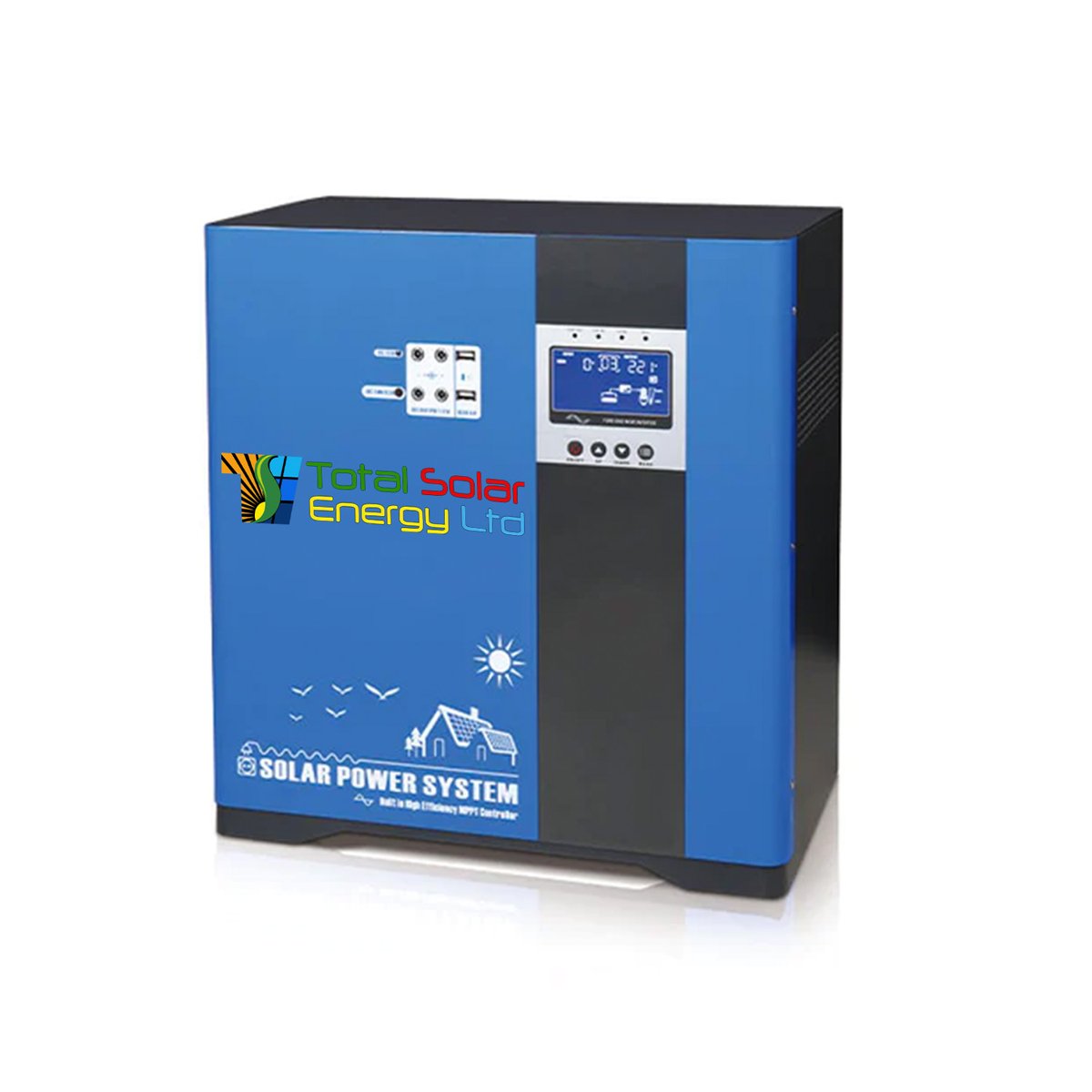
Power outages, off-grid adventures, or simply seeking energy independence – the reasons to invest in a robust portable power solution are more compelling than ever. But when you're ready to step up to serious wattage, knowing how to choose the best 5000W solar generator for your needs becomes a critical decision. These aren't your average power banks; we're talking about sophisticated systems capable of keeping essential home appliances humming or entire campsites energized.
This guide is designed to cut through the jargon, empower you with knowledge, and help you confidently select a 5000-watt solar generator that truly meets your demands.
At a Glance: What You Need to Know
- What it is: A 5000W solar generator provides 5,000 watts of continuous power, storing energy in a large battery charged by solar panels, wall outlets, or car.
- Key Use Cases: Ideal for home backup, RVs, camping, workshops, or emergency preparedness.
- Capacity vs. Output: 5000W is the output (how much power it can deliver at once). Capacity (Wh) is how much energy it can store (determines runtime).
- Battery Matters: Prioritize LiFePO4 (LFP) batteries for longer life (3,000-5,000 cycles) and enhanced safety over standard lithium-ion.
- Critical Specs: Look for true 5000W continuous output, high solar input (1000W+ with MPPT), fast AC charging, and essential safety certifications.
- Price Range: Expect to invest $2,500 to $5,500+ for a quality unit, with LiFePO4 systems offering better long-term value.
Why a 5000W Solar Generator Deserves Your Attention
Forget the small, single-device chargers. A 5000-watt solar generator steps into a whole new league, offering a powerful, portable, and sustainable energy hub for a wide range of applications. Whether it's to keep your refrigerator cold during a grid failure, power an entire RV kitchen, or run heavy-duty tools at a remote job site, these units provide serious juice.
They represent a significant upgrade from smaller power stations, bridging the gap between basic backup and comprehensive energy independence. Their ability to deliver clean, quiet, and emission-free electricity via pure sine wave inverters makes them safe for even your most sensitive electronics.
Unpacking the Power: What "5000W" Really Means
When you see "5000W" on a solar generator, it primarily refers to its continuous AC power output. This is the amount of electricity the generator can reliably supply to your devices at any given moment.
However, there's another crucial number: peak or surge output. Many appliances, especially those with motors like refrigerators, microwaves, or power tools, require a burst of extra power when they first start up. A quality 5000W unit will typically boast a surge rating well above 7,000 watts (sometimes up to 10,000W) to handle these initial demands without tripping overloaded circuits. Without adequate surge capacity, your generator might fail to start these vital appliances, even if their running wattage is well within the continuous limit.
Beyond wattage, you'll also encounter watt-hours (Wh), which is the measure of the generator's battery capacity. This tells you how much energy the generator can store and, consequently, how long it can run your devices. For a 5000W output unit, total usable energy typically ranges from 3,500Wh to 5,000Wh. To put that in perspective, a 1,000-watt appliance could run for approximately 3.5 to 5 hours on a fully charged unit within this range.
Your Personal Power Blueprint: Assessing Your Needs
Before you even glance at models, the single most important step is understanding your specific power requirements. Overbuying means wasted money and bulk; underbuying means frustration when your critical devices fail to run.
Step 1: Tally Your Watts (Continuous & Surge)
Grab a pen and paper, or open a spreadsheet. List every appliance and device you anticipate powering with your solar generator. For each item, find its running wattage and, if applicable, its surge wattage. This information is usually on a label, in the user manual, or easily found online.
- Running Wattage: This is the power an appliance uses consistently.
- Surge Wattage: This is the momentary spike in power some appliances need at startup.
Example: - Refrigerator: 150W running, 1500W surge
- Microwave: 1000W running, 1500W surge
- Laptop Charger: 60W running
- LED Lights: 20W running
- Coffee Maker: 800W running
- Total Continuous (if all run simultaneously): 150 + 1000 + 60 + 20 + 800 = 2030W
- Highest Single Surge: 1500W (from either fridge or microwave)
Your generator's continuous output must exceed your highest simultaneous running wattage (e.g., 2030W in the example above). Its peak/surge output must comfortably handle the highest individual surge requirement of any device (e.g., 1500W). A true 5000W solar generator provides ample headroom for typical home or RV needs.
Step 2: Calculate Your Runtime (Watt-Hours)
Once you know the wattage of your devices, you need to determine how long you want to run them. This is where watt-hours (Wh) come in.
- Estimate Daily Usage: For each device, estimate how many hours per day you'll use it.
- Refrigerator: 8 hours (compressor cycles) x 150W = 1200Wh
- Microwave: 0.25 hours (15 min) x 1000W = 250Wh
- Laptop: 4 hours x 60W = 240Wh
- LED Lights: 6 hours x 20W = 120Wh
- Coffee Maker: 0.5 hours x 800W = 400Wh
- Total Estimated Daily Watt-Hours: 1200 + 250 + 240 + 120 + 400 = 2210Wh
- Account for Efficiency: Generators aren't 100% efficient. Factor in a real-world efficiency of 80-90%. So, if you need 2210Wh, you might actually need a generator with a usable capacity of 2210Wh / 0.85 = ~2600Wh.
- Generator Capacity: A 5000W solar generator typically has a battery capacity between 3,500Wh and 5,000Wh. In our example, a 3,500Wh unit would run your essential items for approximately (3500 / 2600) * 1 day = 1.35 days before needing a recharge. This calculation is crucial for understanding how long your system will last during an extended outage or off-grid trip.
Dissecting the Specs: What to Look For in a 5000W Unit
Now that you've established your power blueprint, it's time to evaluate the features that make a 5000W solar generator a smart investment.
The Heart of the System: Battery Capacity & Chemistry
The battery is arguably the most critical component.
- Capacity (Wh): As discussed, this determines your runtime. Aim for a capacity that comfortably exceeds your daily estimated watt-hour consumption.
- Chemistry: LiFePO4 (Lithium Iron Phosphate) batteries are the gold standard here. They offer:
- Longer Lifespan: Typically 3,000 to 5,000 charge cycles to 80% capacity, meaning years of reliable use. Standard lithium-ion batteries often offer 500-800 cycles.
- Enhanced Safety: More thermally stable and less prone to overheating or "thermal runaway."
- Durability: Better performance in a wider range of temperatures.
While LiFePO4 batteries might come with a higher upfront cost, their extended lifespan and superior safety make them a far better long-term value. To maximize longevity, always store your generator at 30-80% charge and avoid prolonged full discharges.
True Power Output: Continuous vs. Surge
Reiterate your earlier calculations here. Ensure the generator explicitly states its continuous AC output at 5,000 watts. Don't be fooled by models that boast a 5000W peak but a much lower continuous output (e.g., 2400W). A true 5000W generator will typically have surge ratings well above 7,000 watts to handle high-drain appliances with ease.
Solar Charging Smarts: Input & Panel Compatibility
The "solar" in solar generator is key.
- Solar Input Rate: This is measured in watts (e.g., 1000W, 2000W) and indicates how quickly the unit can recharge using solar panels. A higher input rate means faster recharging, which is vital for sustained off-grid use or recovering from an outage quickly.
- MPPT Charge Controller: This is non-negotiable. An MPPT (Maximum Power Point Tracking) charge controller optimizes the power harvested from your solar panels, especially in varying light conditions. It's significantly more efficient than older PWM (Pulse Width Modulation) controllers, ensuring you get the most out of your panels.
- Panel Compatibility: Check the voltage and connector type required. Some brands offer bundled solar panels for out-of-the-box readiness, which can simplify setup.
Recharge Flexibility: Beyond the Sun
While solar is a primary charging method, versatility is a huge plus.
- AC Wall Outlet: Look for fast charging capabilities from a standard wall outlet, ideally under 4 hours for a full charge. Some premium models can charge in under 2 hours.
- 12V Car Port: A slower but useful option for charging while on the move in an RV or vehicle.
- Dual Charging: Some advanced units allow simultaneous charging from both solar and AC, dramatically reducing recharge times.
Portability & Design: Built for Your Lifestyle
A 5000W solar generator is a substantial piece of equipment. Units typically range from 80 to 150 lbs.
- Integrated Handles & Wheels: Essential for easy transport, especially for larger units.
- Weight & Footprint: Consider where you'll store and use it.
- Durability: For outdoor use, look for rugged casings and potentially an IP-rated enclosure for resistance to dust and splashes.
Outlets & Connectivity: Powering Everything
Ensure the generator has a sufficient number and variety of output ports to accommodate all your devices.
- AC Outlets: Multiple standard household outlets (120V).
- USB-A & USB-C: For charging phones, tablets, laptops. Look for USB-C PD (Power Delivery) for faster charging.
- 12V DC Port: Car-style outlet for compatible devices.
- RV-Ready (30A or 50A): If you plan to power an RV, a dedicated RV-compatible outlet is a significant convenience.
- App/Remote Control: Bluetooth or WiFi connectivity allows you to monitor battery status, power draw, and control outlets from your smartphone, a very convenient feature for larger units.
Built to Last: Durability & Safety
Safety and reliability are paramount for such a powerful device.
- Sturdy Build Quality: A robust outer shell and internal components.
- Advanced Battery Management System (BMS): A sophisticated BMS protects against overcurrent, overvoltage, overheating, short-circuiting, and deep discharge, all critical for battery longevity and user safety.
- Safety Certifications: Look for recognized certifications like UL, ETL, or IEC. These indicate that the product has met rigorous safety standards.
- Pure Sine Wave Inverter: Essential for sensitive electronics, preventing damage and ensuring smooth operation.
Future-Proofing: Expandability
For those with evolving power needs, modular systems offer a significant advantage. Some 5000W solar generators allow you to add extra battery packs, dramatically increasing total capacity (e.g., up to 20,592Wh). This provides scalability, letting you start with a base unit and expand as your needs grow, or for longer backup durations.
The Assurance: Warranty & Brand Support
Don't overlook the importance of a solid warranty and reliable customer support. A minimum 2-year warranty is advisable, but many reputable brands offer 3 to 5 years, signaling confidence in their product's durability. Good customer service is invaluable if you encounter issues or have technical questions.
Beyond the Box: Understanding 5000W Solar Generator Types
Not all 5000W solar solutions are built the same. Your application will dictate the best type for you. When you're ready to Explore 5000 watt solar generators, consider these categories.
1. Integrated All-in-One Units
- What they are: These are the most common portable solar generators, combining the battery, inverter, charge controller, and all outlets into a single, often wheeled, portable unit.
- Pros: Easy to set up and use, highly portable, compact.
- Cons: Often have limited scalability; you're typically stuck with the initial battery capacity.
- Best for: Home backup, RVs, camping, general portable power.
2. Modular Expandable Systems
- What they are: These systems feature a main power unit (inverter, charge controller, initial battery) that can be connected to additional, external battery packs.
- Pros: Highly scalable, allowing you to increase energy storage significantly over time. Offers more customization options.
- Cons: Higher upfront cost for the full system, can be more complex to manage with multiple components.
- Best for: Users with growing power needs, extended off-grid living, or those who want maximum flexibility.
3. Hybrid Inverter + Battery Kits (for Permanent Installations)
- What they are: While still involving a "battery" and "inverter," these are designed for more permanent, often home-integrated, setups. They typically connect directly to your home's electrical panel via a transfer switch.
- Pros: Seamless home integration, can automatically switch during outages, often allow for larger solar arrays.
- Cons: Less mobile, requires professional installation by a licensed electrician, higher complexity.
- Best for: Whole-home backup, grid-tied solar-plus-storage solutions. (Note: A portable 5000W generator is generally not designed for this type of permanent, direct home circuit integration without professional guidance and specific safety measures).
Navigating the Market: Price vs. Value in 2024
As of 2024, genuine 5000-watt solar generators typically range from $2,500 to $5,500, with some high-end modular systems exceeding this.
- Lower-Priced Models (<$3,000): Be cautious. These might compromise on battery chemistry (using less durable standard lithium-ion), continuous output (often 2400W continuous with 5000W peak), or overall build quality and features.
- Premium Models ($4,000+): These usually offer advanced LiFePO4 batteries, higher continuous output, faster charging, robust build quality, more comprehensive safety features, and often expandability options.
- Long-Term Value: Remember, a system with a LiFePO4 battery, though pricier initially, provides significantly better long-term value due to its extended lifespan and greater number of charge cycles. This reduces your cost per watt-hour over the life of the product.
Avoiding Red Flags & Common Pitfalls
When comparing options, be wary of:
- Exaggerated Wattage Claims: Ensure the 5000W refers to continuous AC output, not just peak.
- Missing Detailed Specifications: Reputable brands provide full specs on battery type, cycle life, charge controller type (MPPT), and safety features.
- Lack of Safety Certifications: No UL, ETL, or IEC means proceed with extreme caution.
- Poor Return Policies or Warranties: A sign of a less confident manufacturer.
- "Too Good to Be True" Prices: Quality components aren't cheap.
Always purchase from authorized dealers or directly from reputable manufacturers to ensure you receive a genuine product with valid warranty support. When you're comparing specifications, it helps to understand the full capabilities. For example, some units like the OSCAL 2400W Solar Generator might advertise 5000W peak output with a lower continuous (2400W), but offer significant expandability up to 20,592Wh, which could be ideal for massive storage needs, even if the continuous output is lower than a true 5000W unit. Similarly, the OUKITEL P2001 Plus also lists 5000W peak with 2400W continuous, boasting LiFePO4 and fast 1.5-hour charging. The Bluetti AC500 and EcoFlow Delta Pro Ultra are examples of models that deliver true 5000W (or close) continuous output with substantial capacities.
Installation & Maintenance Best Practices
Once you've chosen your 5000W solar generator, proper care ensures its longevity and safe operation.
- Storage: Always store your generator at a 30-80% charge level in a cool, dry place. Extreme temperatures can degrade battery life.
- Ventilation: Ensure clear ventilation around the unit during operation to prevent overheating.
- Compatible Panels: Only use solar panels compatible with your generator's input voltage and connector type. Using incorrect panels can damage the charge controller.
- Environmental Protection: Unless explicitly rated IP65 or higher, never expose your generator to rain, heavy moisture, or excessive dust.
- Home Wiring Integration: If you plan to connect your solar generator to your home's electrical system, always consult a licensed electrician. A proper transfer switch is essential to prevent backfeeding power into the grid, which is dangerous and illegal. This is more common with hybrid inverter kits than portable units.
Making Your Final Choice: A Quick Checklist
Ready to make your move? Use this checklist to confirm your decision:
- Power Needs Met: Does the generator’s continuous and surge output exceed your maximum calculated demands?
- Runtime Achieved: Does the battery capacity (Wh) provide the necessary hours of operation for your critical devices?
- LiFePO4 Battery: Is it the safer, longer-lasting LiFePO4 chemistry?
- Efficient Solar Input: Does it have a high-wattage solar input and an MPPT charge controller?
- Fast AC Charging: Can it recharge quickly from a wall outlet?
- Ports Galore: Are there enough and the right types of outlets for all your devices, including any RV or 30A needs?
- Durability & Safety: Does it have robust construction, a comprehensive BMS, and relevant safety certifications (UL, ETL, IEC)?
- Expandability (if needed): Can you add extra battery packs if your future needs grow?
- Warranty & Support: Does the brand offer a strong warranty (3-5 years preferred) and reliable customer service?
- Reputable Seller: Are you purchasing from an authorized dealer or directly from the manufacturer?
Choosing a 5000W solar generator is a significant investment, one that promises peace of mind and energy independence. By meticulously assessing your needs and understanding the key specifications, you'll be well-equipped to select a system that serves you faithfully for years to come. Remember, the goal is to find the right 5000-watt solar generator that fits your unique lifestyle and power requirements, ensuring you're always prepared, whether for adventure or unexpected outages.