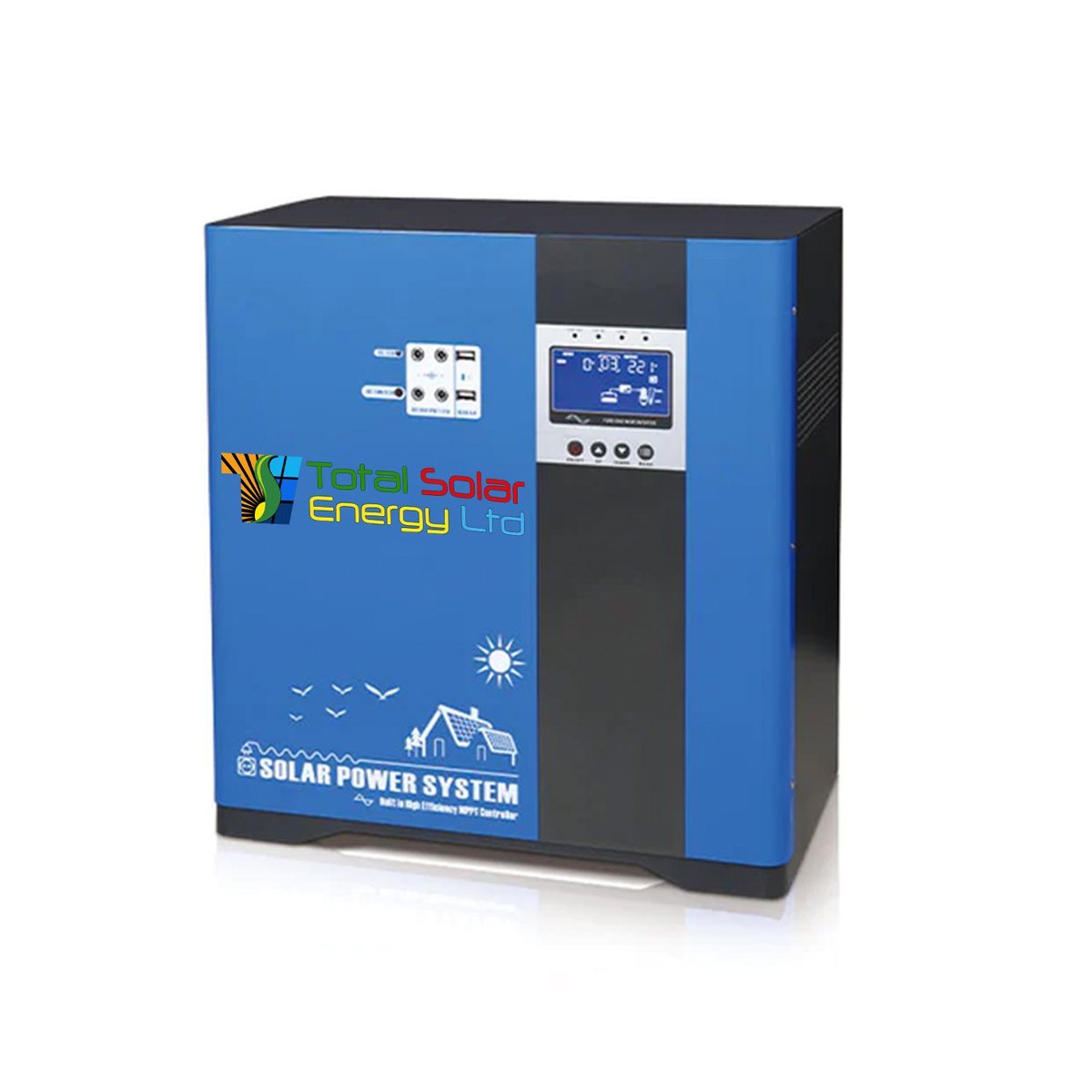
Reviews & Comparisons of Top 5000W Solar Generator Models Unveiled: Your Ultimate Guide to Off-Grid Power
The hum of a reliable power source, even when the grid goes silent, brings unparalleled peace of mind. For many, that source is increasingly a 5000-watt solar generator. These robust systems strike a powerful balance, offering significant juice for your essential appliances without the noise, fumes, or fuel dependence of traditional generators. If you're looking to fortify your home backup, elevate your RV adventures, or power a remote job site with clean energy, you're in the right place. We're diving deep into the Reviews & Comparisons of Top 5000W Solar Generator Models, cutting through the jargon to show you exactly what makes these units shine and how to pick the perfect one for your needs.
At a Glance: What You Need to Know About 5000W Solar Generators
- Serious Power: A 5000-watt generator can run essential home appliances like refrigerators, lights, microwaves, and even small heating/cooling units. It's powerful, but generally not designed to power an entire house, including central AC.
- Eco-Friendly & Quiet: Unlike gas generators, solar models produce no emissions and operate with minimal noise, making them ideal for indoor backup or quiet outdoor use.
- Battery is Key: Most top models use advanced LiFePO4 batteries, known for their long lifespan (3000-3500+ charge cycles, often 10-15 years) and enhanced safety.
- Versatile Recharging: Charge your solar generator from solar panels, a standard AC wall outlet, or your car's 12V socket. Some even combine AC and solar for incredibly fast recharges.
- Smart Features Are Standard: Expect Bluetooth/WiFi app control, comprehensive Battery Management Systems (BMS), and multiple output ports for all your devices.
- Investment, Not Just an Expense: While the initial cost might be higher than conventional generators, solar generators offer long-term savings on fuel and can sometimes qualify for clean energy tax credits.
Why Go Solar at 5000 Watts? Balancing Power and Purpose
A 5000-watt generator isn't just a number; it's a capability. It means you can comfortably run a combination of critical appliances during a blackout, support an off-grid cabin, or keep power tools humming at a remote site. Think of it this way: your refrigerator typically draws 150-800 watts, a microwave 600-1200 watts, and lights a mere 10-100 watts. A 5000W solar generator can handle several of these simultaneously.
While conventional fuel-powered generators also offer 5000W, they come with significant drawbacks: constant noise, hazardous carbon monoxide emissions (making indoor use strictly forbidden), the need to store flammable fuel, and ongoing fuel costs. Solar generators, on the other hand, convert sunlight into electricity, store it in robust batteries, and deliver clean, silent power. This makes them a superior choice for emergency home backup, camping, RVs, and any scenario where peace and quiet are as important as reliable power.
Decoding the Best: Key Factors When Choosing Your 5000W Solar Generator
Selecting the right 5000-watt solar generator involves more than just looking at the headline wattage. It's about understanding the nuanced features that deliver real-world performance. Here’s how we break down the critical criteria:
1. Power Output: Continuous vs. Peak Watts – What's the Difference?
You'll see two numbers here:
- Continuous (Running) Watts: This is the steady power your generator can provide day in, day out. For a 5000W solar generator, this is your baseline for running appliances consistently.
- Peak (Starting/Surge) Watts: Many motor-driven appliances (like refrigerators, blenders, or power tools) need a brief burst of extra power to start up before settling into their running wattage. This surge can be 2-3 times their continuous draw. A good 5000W solar generator will have a peak output at or above 5000W, ensuring it can handle these initial power spikes without tripping. Always check both specs!
2. Battery Technology & Capacity: The Heart of Your Solar Power
For solar generators, the battery is everything.
- LiFePO4 (Lithium Iron Phosphate) Batteries: This is the gold standard for high-capacity solar generators. They offer exceptional longevity (typically 3000-3500+ charge cycles, translating to 10-15 years of daily use), superior safety, and better thermal stability compared to older lithium-ion chemistries.
- Capacity (Watt-Hours - Wh): This tells you how much energy the battery can store. A higher Wh means longer runtime for your appliances. For example, a 5000Wh battery running a 500W appliance could理论上 last for about 10 hours (5000 Wh / 500 W = 10 hours), though efficiency losses mean real-world runtime is slightly less. When considering a generator in this power class, a higher Wh capacity translates directly to greater resilience during extended outages or off-grid living.
3. Recharging Speed and Versatility: Minimizing Downtime
What good is a powerful generator if it takes forever to recharge?
- AC Wall Charging: Look for fast AC charging capabilities. Some models can go from 0% to 80% or even 100% in a little over an hour.
- Solar Input: How many watts of solar input can the generator handle? More solar input means faster recharging from your panels. Efficient MPPT (Maximum Power Point Tracking) controllers are essential for optimizing solar charging.
- Car Charging: A useful option for topping up on the go.
- Combined Charging: The best models often allow simultaneous AC and solar charging, dramatically reducing recharge times. For instance, combining 1100W AC with 500W solar can fully charge a large battery in 1.5 hours.
4. Portability and Design: Moving Your Power Source
Even a powerful 5000W unit needs to be moved sometimes.
- Weight & Size: These generators can be hefty (some over 100 pounds). Assess if you need frequent portability or if it's more of a stationary backup.
- Wheels & Handles: Essential features for easier transport. Sturdy, well-designed handles and robust wheels make a huge difference.
5. Noise Levels: Enjoy the Silence
One of solar power's biggest advantages! While conventional generators roar at 60-70 dB, solar generators are nearly silent, typically operating at 30-40 dB. This is crucial for home backup, camping, or any situation where noise would be disruptive.
6. Outlets and Connectivity: Your Power Hub
The more diverse the output options, the more versatile your generator.
- AC Outlets: Multiple standard 120V AC outlets are a must.
- High-Power Outlets: For RVs or heavier loads, look for 30-amp RV-ready outlets (TT-30R, NEMA L5-30R) or even 120/240V twist-lock options if you plan to link multiple units.
- USB Ports: USB-A and USB-C (preferably Power Delivery - PD) for charging phones, laptops, and other gadgets.
- 12V DC Outlets: For car accessories or specific DC appliances.
- Smart Features: Bluetooth and Wi-Fi connectivity with companion mobile apps for remote monitoring, control, and firmware updates are becoming standard. This allows you to check battery status, adjust settings, and manage power usage from your smartphone.
7. Safety and Durability: Built to Last
Your investment deserves to be protected.
- Battery Management System (BMS): For solar generators, a robust BMS is paramount. It monitors voltage, temperature, and current, preventing common battery issues like overcharge, over-discharge, overheating, and short circuits, significantly extending battery life and ensuring safe operation.
- Build Quality: Look for durable construction, often with reinforced casings or sturdy frames that can withstand tough conditions.
- Warranty: A strong warranty (2-5 years is good) indicates manufacturer confidence in their product.
8. Clean Power for Sensitive Electronics: No Surprises
- Low Total Harmonic Distortion (THD): Sensitive electronics (laptops, smart TVs, medical devices) require a "clean" sine wave power output to prevent damage. High-quality solar generators (and inverter-based conventional generators) provide power with less than 3-5% THD, which is safe for all your delicate devices.
9. Additional Features That Sweeten the Deal
- Expandable Battery Options: Some systems allow you to add extra battery packs, increasing your total energy storage for longer runtimes.
- Home Integration: Models designed for home backup can often be integrated with your home's electrical system via a transfer switch (installed by a licensed electrician) for seamless power during outages.
- Tax Credits: Certain solar generator systems, especially larger, more permanent installations, may be eligible for residential clean energy tax credits, offering significant savings.
Deep Dive: Top 5000W Solar Generator Models Under the Microscope
Now, let's explore some of the leading contenders in the 5000W solar generator space, drawing from current market offerings and key innovations. Remember, "5000W" often refers to the surge capability, while continuous output might be slightly less, but still ample for demanding tasks.
1. OUKITEL P2001 Plus: Power-Packed and Portable
- Key Specs:
- Battery Capacity: 2048Wh LiFePO4
- Output: 2400W Continuous / 5000W Peak
- Weight: 22.23 kg (approx. 49 lbs)
- Charging: Fast AC charging, solar input (often paired with 400W solar panel bundles).
- Features: Bluetooth/WiFi app control, 5-year customer service package.
- The Scoop: The P2001 Plus is an excellent example of a highly capable portable power station that offers a substantial surge capacity, hitting that 5000W mark for starting demanding appliances. Its continuous 2400W is robust for many applications, and the 2048Wh battery provides solid runtime. The relatively lighter weight (for its power class) and app control make it very user-friendly for both home backup and mobile scenarios.
2. OUKITEL P5000: The Long-Haul Powerhouse
- Key Specs:
- Battery Capacity: 5120Wh LiFePO4 (rated for 15+ years or 3500+ cycles)
- Output: 2200W Continuous / 4000W Peak
- Charging: 1800W fast AC charging.
- Features: Advanced BMS/MCU systems for optimal safety and performance.
- The Scoop: While its continuous output is 2200W, the P5000 earns its spot due to its massive 5120Wh LiFePO4 battery, providing incredible endurance. Its 4000W peak is sufficient for most appliance startup needs. This model is truly designed for extended power needs, where longevity and battery capacity are paramount. The fast 1800W AC charging means even this large battery can be replenished quickly.
3. Jackery Solar Generator 4000 Kit: The Quiet Achiever
- Key Specs:
- Battery Capacity: 4085.6Wh
- Output: 3000W Continuous
- Solar Panels: Includes dual 200W solar panels.
- Noise Level: Operates quietly at 30dB.
- Charging: 0-80% in 1.3 hours (AC) or 1.6 hours (solar).
- Features: Eligible for clean energy tax credits.
- The Scoop: Jackery is a well-known name for reliable portable power. The Solar Generator 4000 Kit, while technically a 3000W continuous output system, is often compared in this class due to its comprehensive kit, significant battery capacity, and impressive quick charging. Its exceptionally low noise level (30dB is whisper-quiet) makes it ideal for indoor use or peaceful outdoor environments. The eligibility for clean energy tax credits can also make it a more attractive long-term investment. If you're looking to Explore 5000-watt solar generators with a strong focus on quiet operation and bundled solar panels, Jackery is a top contender.
4. BPS-5000W Solar Power System: The Home Backup Specialist
- Key Specs:
- Battery Capacity: 5120Wh LiFePO4 powerwall
- Output: 5000W Continuous
- Solar Panels: Paired with 1200W solar panels (for daily yield of 7.2-9.6 kWh).
- Features: 5KW hybrid inverter, allows 240V output via parallel inverter linking, designed for robust home backup.
- The Scoop: This is less of a "portable generator" and more of a "portable powerwall" or mini-home energy system. The BPS-5000W provides a true 5000W continuous output, coupled with a substantial 5120Wh battery and serious solar input capabilities. Its hybrid inverter and 240V output potential make it excellent for more integrated home backup solutions, capable of handling higher voltage appliances or larger loads by connecting units in parallel. This system pushes the boundaries of a solar generator towards a complete home energy solution.
5. SolarPlay Portable Power Station 2500W: Surge King in a Smaller Package
- Key Specs:
- Battery Capacity: 2304Wh LiFePO4
- Output: 2500W Continuous / 5000W Surge
- Charging: Four charging methods, fast boost achieves full charge in 1.5 hours (1100W AC + 500W solar).
- Lifespan: Exceeds 10 years and 3500 charge cycles.
- The Scoop: The SolarPlay 2500W is a perfect example of a unit that hits the 5000W surge capacity while offering a very respectable 2500W continuous output. Its LiFePO4 battery boasts an excellent lifespan, and the ability to fully charge in just 1.5 hours using combined AC and solar input is truly impressive for its capacity. This model is ideal if you need significant surge power for starting appliances but also value portability and incredibly fast recharging from a slightly smaller (but still robust) battery.
Beyond the Purchase: Living with Your 5000W Solar Generator
Acquiring a powerful solar generator is just the first step. To truly maximize its value and ensure its longevity, consider these practical aspects:
Optimizing Your Solar Charging Setup
The efficiency of your solar panels directly impacts how quickly your generator recharges.
- Panel Placement: Always position panels to receive maximum direct sunlight throughout the day. Adjusting them to follow the sun can significantly boost power output.
- Panel Wattage: Match the solar panel wattage to your generator's maximum solar input. Don't undersize your panels if you want quick recharges.
- Cleanliness: Keep your solar panels free from dust, dirt, and debris to maintain optimal efficiency.
Minimal Maintenance, Maximum Life
One of the beauties of solar generators is their low maintenance. Unlike conventional models that require oil changes and fuel stabilizers, solar units are mostly hands-off.
- Battery Care: While LiFePO4 batteries are robust, avoiding consistent extreme temperatures (both very hot and very cold) can further extend their lifespan. If storing for long periods, keep the battery around 50-80% charged.
- Regular Use: Periodically use and recharge your generator to keep the battery cells active and prevent deep discharge over very long inactive periods.
- Firmware Updates: If your generator has smart features, ensure you apply any firmware updates via the mobile app, as these often improve performance and efficiency.
Cost, Tax Credits, and Long-Term Value
The initial investment for a 5000W solar generator can range from $2,000 to $5,000+, depending on battery capacity, output, and included solar panels. While higher than a conventional generator, consider the long-term benefits:
- No Fuel Costs: Eliminate ongoing expenses for gasoline or propane.
- Environmental Impact: Enjoy clean, silent power.
- Tax Credits: As mentioned, certain systems may qualify for residential clean energy tax credits, reducing the overall cost. Consult a tax professional for specific eligibility.
- Increased Property Value: For integrated systems, adding reliable backup power can be an attractive feature.
Safety First: A Universal Rule
While solar generators don't pose the carbon monoxide risk of fuel-powered units, general electrical safety rules still apply.
- Never Overload: Understand your generator's continuous and peak wattage and avoid exceeding these limits to prevent damage.
- Proper Ventilation: Even though there are no fumes, ensure good airflow around the unit, especially during high-power output or charging, as batteries can generate some heat.
- Water Protection: Keep your generator dry and away from rain or excessive moisture.
Making Your Choice: A Blueprint for Buying
With the myriad of options available, how do you pinpoint the best 5000W solar generator for you?
- Identify Your Core Need: Is it short-term emergency backup, extended off-grid living, or portable power for work/recreation? This will dictate battery capacity and portability needs.
- List Your Essential Appliances: Calculate their running and starting (surge) wattages. Ensure the generator's continuous output can handle your primary load and its peak output can manage startup spikes.
- Prioritize Recharging: How quickly do you need to replenish the battery? If rapid turnaround is critical, focus on models with high AC and solar input capabilities, and combined charging options.
- Consider Your Environment: If noise is a concern, solar is inherently superior. If frequent movement is needed, prioritize weight, handles, and wheels.
- Future-Proofing: Do you anticipate needing more power later? Look for models with expandable battery options or the ability to link units in parallel.
- Budget vs. Features: While price is a factor, view your solar generator as a long-term investment. Sometimes, spending a little more upfront for better battery chemistry, higher capacity, or advanced features pays dividends in longevity and reliability.
Powering Forward: The Future of Your Energy Independence
Investing in a 5000W solar generator isn't just about buying a piece of equipment; it's about investing in energy independence and peace of mind. As technology advances, these units are becoming even more efficient, powerful, and integrated. By understanding the key selection criteria, knowing what leading models offer, and applying practical usage tips, you're well-equipped to choose a solar generator that reliably meets your power needs for years to come. Embrace the quiet, clean, and dependable power of the sun, and stay charged no matter what comes your way.