So, you're ready to harness the sun's power with a robust 5000W solar generator system? Excellent choice. Whether you're aiming for off-grid living, emergency backup, or simply reducing your carbon footprint, properly Setting Up & Optimizing Your 5000W Solar Generator System is key to a reliable and efficient power supply. Forget complicated diagrams and dense manuals; we’re going to walk through this together, turning what seems like a daunting project into a clear, actionable plan.
This isn't just about buying components; it’s about strategically assembling them, understanding how they work in harmony, and ensuring you get every last watt of usable power. Let's get started.
At a Glance: Your Solar Power Journey Ahead
- Calculate Your Real Needs: Don't guess; tally device wattage (starting and running) to avoid under or oversizing.
- Pick the Right Parts: Understand the role of solar panels, batteries, inverters, and charge controllers.
- Build Smart, Build Safe: Follow a wiring plan meticulously and prioritize electrical safety.
- Optimize for Sun: Maximize energy capture through smart panel placement and minimize losses.
- Maintain for Longevity: Regular checks and cleaning keep your system humming for years.
Why 5000W? The Power You Need, When You Need It
A 5000-watt solar generator system isn't just a toy; it's a serious power solution. This capacity can run a surprising number of essential appliances simultaneously – from refrigerators and microwaves to power tools and multiple lights. It’s a sweet spot for many homeowners looking for substantial backup power or for those embracing a more independent energy lifestyle. Before you even think about buying a single component, however, you need to understand precisely what this power will be used for.
First Things First: Sizing Your Solar System (Accurately!)
One of the biggest mistakes people make when building a solar generator is guessing their energy needs. You wouldn’t buy a car without knowing where you're going, right? The same logic applies here. Accurately calculating your energy consumption is the cornerstone of a successful 5000W system.
Here’s how to do it:
- List Every Essential Device: Start by making a comprehensive list of all the electronic devices you intend to power with your 5000W system. Think about what's truly critical during an outage or for your daily off-grid life.
- Find the Wattage: For each device, locate its wattage. This is usually on a label on the back or bottom of the appliance, or in its user manual. You'll likely see two crucial numbers:
- Starting (Surge) Wattage: The initial burst of power a device needs to turn on, especially those with motors (refrigerators, pumps, power tools). This can be 2-3 times its running wattage.
- Running Wattage: The continuous power a device uses once it's operating.
- Tally It Up: For your 5000W system, your inverter's continuous rating needs to exceed the sum of all your running wattages for devices you expect to use simultaneously. Crucially, the inverter's surge rating must handle the highest individual starting wattage among those devices. This total helps determine the precise size and capacity of not just your inverter, but also your battery bank and the number of solar panels you'll need.
Pro Tip: Don't just add everything up for 24 hours. Think in terms of peak concurrent usage. What will be running at the exact same moment? This prevents overspending on capacity you don't need and ensures you have enough power when it matters most.
Building Blocks of Your 5000W Powerhouse: Component Deep Dive
Once you have a solid grasp of your power needs, it's time to select the core components that will form your 5000W solar generator. Each piece plays a vital role, and choosing wisely ensures efficiency and longevity. For a broader overview, you might want to visit the 5000 watt solar generator hub for more foundational information.
Solar Panels: Harvesting the Sun's Bounty
These are your energy collectors, literally soaking up sunlight. To power a 5000W system, you’ll need a collection of panels whose combined output totals or exceeds your daily energy requirements, considering peak sun hours in your location.
- Panel Types: You'll primarily encounter monocrystalline and polycrystalline panels.
- Monocrystalline: Generally more efficient (better for limited space) and perform slightly better in low light, but tend to be pricier.
- Polycrystalline: A more budget-friendly option, slightly less efficient, requiring more surface area for the same output.
- Sizing Your Array: A 5000-watt system implies a significant solar array. You'll likely use multiple panels, each typically ranging from 100W to 400W. The total peak power output of your panels should be matched to your battery bank's charging capacity and your desired recharge time. Don't forget to factor in potential shading and efficiency losses (which we'll cover in optimization). For a deeper dive into the specifics, check out understanding different solar panel types and their efficiency.
Battery Storage: The Heart of Your System
Batteries are where your captured solar energy is stored, ready for use when the sun isn't shining. This is one of the most critical decisions for a 5000W system.
- Lead-Acid Batteries:
- Pros: Sturdy, well-established technology, and generally more budget-friendly upfront.
- Cons: Heavier, require ventilation (due to off-gassing), shorter lifespan, require more maintenance (watering), and have a shallower depth of discharge (DOD) – meaning you can only safely use about 50% of their rated capacity without shortening their life.
- Lithium-Iron Phosphate (LiFePO4) Batteries:
- Pros: Nimble, highly efficient, significantly longer lifespan (often 10+ years), lighter weight, maintenance-free, faster charging, and a much deeper depth of discharge (up to 80-100% depending on the specific battery management system).
- Cons: Higher upfront cost.
- Recommendation: For a robust 5000W system aiming for efficiency and longevity, LiFePO4 batteries are often the superior choice despite the initial investment. They pay for themselves over time with their superior performance and lifespan. You can find a deeper dive into LiFePO4 vs. lead-acid batteries for more detailed comparison.
- Sizing Your Battery Bank: Your battery bank's capacity (measured in Amp-hours or Watt-hours) dictates how long your system can run without sunlight. A 5000W system will require a substantial battery bank to store enough energy for overnight or multi-day use. Calculate your daily energy consumption in Watt-hours, then multiply by the number of "days of autonomy" you desire, and divide by the battery's usable DOD.
The Inverter: Converting Power for Your Devices
Your solar panels and batteries produce Direct Current (DC) power, but most household appliances run on Alternating Current (AC). The inverter is the component that bridges this gap.
- High-Capacity Inverter: For a 5000W system, you need an inverter specifically sized for 5000 watts of continuous output. Always buy an inverter that can handle the combined running wattage of all devices you intend to use simultaneously, plus a generous buffer for surge wattages.
- Pure Sine Wave vs. Modified Sine Wave:
- Pure Sine Wave Inverters: Produce clean, stable AC power identical to grid power. Essential for sensitive electronics (laptops, medical devices) and recommended for all motor-driven appliances.
- Modified Sine Wave Inverters: Less expensive, but produce a "choppier" waveform that can damage sensitive electronics or cause motors to run less efficiently and hotter.
- Recommendation: For a 5000W system and the array of appliances it's likely to power, a pure sine wave inverter is an absolute must.
The Charge Controller: Battery's Best Friend
This unsung hero manages the flow of energy from your solar panels to your batteries. It optimizes voltage and amperage, preventing overcharging and ensuring your batteries are charged safely and efficiently.
- MPPT Charge Controller: For a system of this size, a Maximum Power Point Tracking (MPPT) charge controller is indispensable.
- Why MPPT? It's significantly more efficient than its PWM (Pulse Width Modulation) counterpart, especially in varying light conditions or when your panel voltage is much higher than your battery voltage. An MPPT controller can boost charging efficiency by 10-30%, directly translating to more usable power from your panels.
- Sizing: The charge controller must be rated to handle the maximum current (amps) that your solar array can produce. Always size it with a safety margin. To learn more about selecting this vital component, read our guide on picking the right charge controller for your setup.
Beyond the Big Four: Essential Accessories & Tools
Don't forget the supporting cast! These DIY accessories are critical for a safe and functional setup.
- Cables and Connectors: Use appropriately sized (gauge) copper wires to minimize voltage drop and prevent overheating. Always use MC4 connectors for solar panel connections, as they are weather-resistant and reliable.
- Mounting Equipment: Sturdy racks or mounts are needed to secure your solar panels in place, protecting them from wind and weather.
- Fuses and Breakers: Essential safety devices that protect your components and prevent electrical fires in case of a short circuit or overload.
- Battery Enclosure: Protects your batteries from the elements and provides ventilation, especially crucial for lead-acid batteries.
- Tools: Basic electrical tools (multimeter, wire strippers, crimpers), wrenches, screwdrivers, and safety gear (gloves, safety glasses).
From Parts to Power: Assembling Your Generator
With your components in hand, it's time to bring your 5000W solar generator to life. This phase requires careful attention to detail and a commitment to safety.
The Blueprint: Why a Wiring Diagram is Non-Negotiable
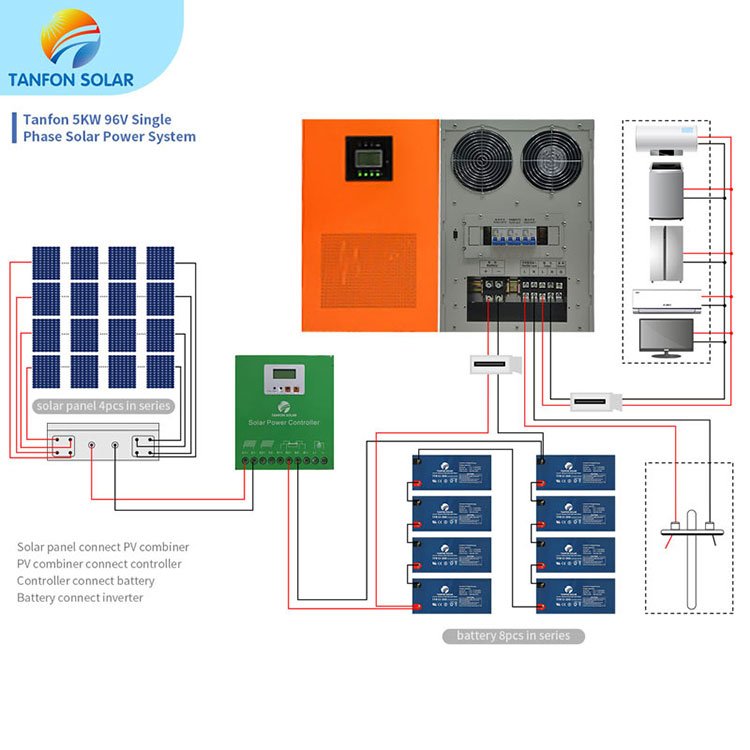
A clear, detailed wiring diagram is your GPS for this project. It outlines the sequential steps for connecting each component – panels to charge controller, charge controller to batteries, batteries to inverter, and inverter to your loads.
- Clarity: It demystifies the connections, showing positive and negative terminals, fuse placement, and wire paths.
- Safety: It ensures you avoid miswiring, which can lead to damaged components, electrical shorts, or even fires.
- Troubleshooting: If something goes wrong, a diagram helps you quickly pinpoint where the issue might be.
- Compliance: Many local electrical codes require a diagram for inspections.
Step-by-Step Assembly Guide (Simplified Overview)
While a detailed, personalized diagram is paramount, here’s the general sequence for construction and assembly:
- Mount Your Solar Panels: Secure panels to their mounts, ensuring optimal sun exposure (more on this in optimization).
- Connect Panels to Charge Controller: Run appropriate gauge wiring from your solar array to your MPPT charge controller. Ensure correct polarity (positive to positive, negative to negative).
- Crucial First Step: Never connect panels to the charge controller before connecting the batteries.
- Connect Charge Controller to Batteries: Connect the charge controller's battery terminals to your battery bank. Again, strict adherence to polarity is vital. This establishes the battery as the target for the solar energy.
- Connect Batteries to Inverter: Run heavy-gauge cables from your battery bank to your 5000W inverter. Include appropriate fusing or a circuit breaker on the positive line close to the battery.
- Connect Inverter to Load: Finally, connect your inverter's AC output to your desired load – whether it's an isolated outlet box, a transfer switch for a backup system, or direct appliance plugs.
- Grounding: Ensure all components (panel frames, inverter chassis, charge controller) are properly grounded according to electrical codes. This is a critical safety measure.
Remember: This is a simplified overview. Your specific wiring diagram will provide the exact details for your chosen components and configuration. Always double-check every connection before powering on.
Optimizing for Peak Performance: Getting the Most Out of Your System
Building your system is just the first half of the battle. To truly maximize the investment in your 5000W solar generator, you need to optimize its performance to capture as much energy as possible and minimize waste.
Panel Placement & Angling: Catching Every Ray
- Unobstructed Sunlight: Ensure your panels have direct, unobstructed access to sunlight throughout the day. Even a small amount of shade on one part of a panel can significantly reduce the output of the entire array if panels are wired in series.
- Optimal Angle: The ideal tilt angle for your solar panels depends on your latitude and the time of year. For year-round general use, a fixed angle roughly equal to your latitude is a good starting point. For seasonal optimization (e.g., maximizing winter sun), you might adjust the tilt angle.
- Orientation: In the Northern Hemisphere, panels should face true south (not magnetic south). In the Southern Hemisphere, they should face true north.
Minimizing Energy Loss: Every Watt Counts
- Proper Cable Sizing: Undersized wires cause voltage drop and generate heat, wasting precious power. Use thick enough gauge wire for the distance and current it carries. This is especially critical for the runs between batteries and the inverter, which carry high current.
- Efficient Appliances: While your 5000W system is robust, using energy-efficient appliances will always extend your battery life and reduce the demands on your system. Look for ENERGY STAR ratings.
- Minimize Phantom Loads: Devices that are plugged in but not actively used can still draw a small amount of "phantom" power. Unplug them or use smart power strips to cut power entirely when not needed.
Understanding Daily Cycles
Your system's performance will naturally fluctuate with the sun's position and weather. Monitor your charge controller's output and battery state of charge (SOC) regularly. This helps you understand your system's capabilities and anticipate periods of lower production. Tools like battery monitors can give you real-time insights into your power consumption and remaining battery life. For more detailed advice, read about strategies for maximizing your solar panel output.
Keeping Your System Safe & Sound: Maintenance for Longevity
A 5000W solar generator is a significant investment, and like any complex system, it requires regular care to perform reliably and safely for years to come.
Safety First, Always
- Wiring Diagram Adherence: This can’t be stressed enough. Meticulously following your wiring diagram during installation and any subsequent modifications is your primary defense against electrical hazards.
- Cross-Check Connections: Before powering up, and periodically thereafter, visually inspect all connections. Ensure they are tight, corrosion-free, and correctly polarized. Loose connections can cause arcing, resistance, and potential fires.
- Proper Grounding: Confirm that all components, including panel frames, inverter chassis, and charge controller, are properly grounded. This diverts dangerous electrical surges and faults away from your equipment and you.
- Fusing & Circuit Breakers: Never bypass fuses or circuit breakers. They are your system's safety valves, designed to trip in overload or short-circuit situations, protecting expensive components and preventing fires.
- Ventilation: Ensure your battery bank has adequate ventilation, especially if using lead-acid batteries, which can off-gas hydrogen during charging. Even LiFePO4 batteries benefit from good airflow to prevent heat buildup.
- Know Your System: Understand how to safely shut down your system in an emergency. This typically involves disconnecting the AC load, then the battery from the inverter, and finally, the solar panels from the charge controller. Find more information on essential DIY solar generator safety tips.
Routine Care: The Key to a Long-Lasting System
- Regular Panel Cleaning: Dust, dirt, leaves, bird droppings, and snow can significantly reduce your panels' efficiency. Clean them periodically with water and a soft brush or cloth. Avoid abrasive cleaners.
- Inspect All Connections: Annually, or more often if exposed to harsh conditions, check all electrical connections for signs of corrosion, looseness, or damage. Tighten as needed.
- Battery Maintenance:
- Lead-Acid: Regularly check electrolyte levels and top up with distilled water as needed. Ensure terminals are clean and free of corrosion.
- LiFePO4: Generally maintenance-free, but monitor their state of charge and overall health through your battery management system (BMS) or a dedicated battery monitor.
- Battery Maintainer/Monitor: Using a good battery monitor provides real-time data on voltage, current, and state of charge, allowing you to react to any issues promptly and maintain battery health.
- Check for Pests: Critters love wires! Inspect for signs of rodent damage to cables, especially if your system is exposed to the elements.
Common Questions & Smart Answers
Can I expand my 5000W system later?
Absolutely! It's wise to design your initial system with future expansion in mind. This means choosing a charge controller and inverter that have a bit of headroom for additional solar panels, and ensuring your battery bank can be expanded by adding more identical batteries (ideally purchased at the same time for optimal balance).
What about portable vs. fixed systems?
A 5000W solar generator is typically a semi-permanent or fixed installation due to the weight and size of the battery bank and panels. While components can be wheeled around, it's not designed for quick "grab and go" like smaller portable units. The panels usually require fixed mounting for optimal performance.
How long will a 5000W system run my house?
This depends entirely on your actual power consumption and the size of your battery bank. A 5000W inverter can deliver 5000 watts, but your battery's capacity determines how long it can sustain that delivery. For example, a 10kWh (10,000 Watt-hour) battery bank could theoretically run a 1000W load for 10 hours. Your calculation of essential device usage (Watt-hours per day) is crucial here.
Your Next Steps to Solar Self-Sufficiency
You've got the roadmap to building and optimizing a powerful 5000W solar generator system. This isn't just about putting parts together; it’s about creating a reliable, efficient, and safe energy solution that empowers you.
Your journey toward energy independence starts with thoughtful planning and meticulous execution. Take your time with each step, prioritize safety above all else, and don't hesitate to consult professionals if you encounter aspects beyond your comfort zone. The sun's energy is abundant and free for the taking – now you have the knowledge to tap into it like a pro. Get ready to enjoy the peace of mind that comes with knowing you’re powered, come what may.