A power outage strikes, your lights flicker, then darkness. Or perhaps you're planning an extended off-grid adventure, far from the nearest outlet. In these moments, understanding 5000W solar generators becomes not just useful, but essential. These powerful, portable energy hubs promise a quiet, clean, and reliable source of electricity, but what exactly are they, and how do they work their magic?
At its heart, a solar generator is a compact electronic box designed to capture the sun's energy, store it, and convert it into usable power for your devices and appliances. Unlike noisy, fume-spewing gasoline generators, solar counterparts operate silently and are safe for indoor use, making them an increasingly popular choice for emergency backup, outdoor excursions, and even full-time off-grid living. When we talk about our 5000 watt solar generator guide, we're looking at a serious piece of equipment capable of running multiple high-draw appliances simultaneously.
At a Glance: Your Quick Guide to 5000W Solar Generators
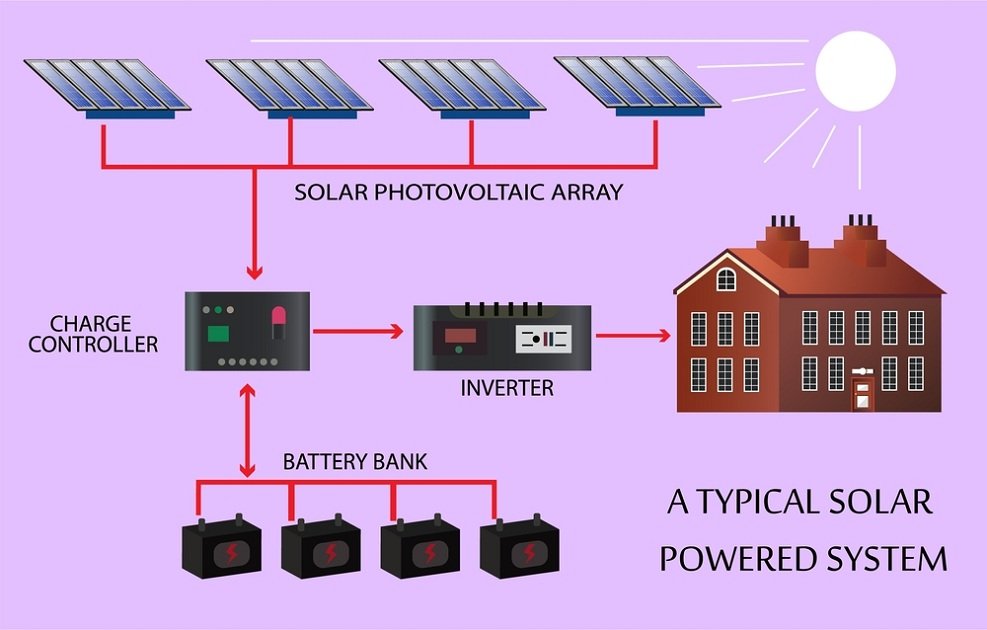
- What it is: A self-contained power system combining solar panels, a charge controller, a battery, and an inverter.
- The "5000W" part: Refers to its continuous AC output capacity, allowing it to power demanding appliances.
- Core Components: Battery (energy storage), Charge Controller (battery protection/management), Inverter (DC to AC conversion).
- Key Benefits: Clean, quiet, no fumes, minimal maintenance, indoor use, renewable energy source.
- Common Uses: Home backup during outages, powering RVs and vans, remote cabins, extended camping, job sites.
- Choosing Wisely: Consider battery capacity, inverter rating, solar input, and battery type (LiFePO4 for longevity).
- DIY Option: Building your own offers customization and cost savings, but requires careful planning and assembly.
The Anatomy of a Solar Generator: Breaking Down the Core Components
Before we dive into the specifics of a 5000W unit, let's dissect the fundamental building blocks present in almost every solar generator. Think of these as the brain, heart, and lungs of your portable power station.
1. The Battery: Your Energy Reservoir
This is the literal powerhouse of the system, storing all the energy collected from the sun. Without a robust battery, your solar generator is just a fancy box with wires.
- Function: Stores the DC (Direct Current) electricity harvested by the solar panels. The battery's capacity, measured in Watt-hours (Wh) or Amp-hours (Ah), dictates how long it can supply power and how many devices it can run.
- Common Types:
- Lithium-ion (Li-ion): Currently the most prevalent choice for ready-made solar generators. They offer an excellent balance of energy density, lighter weight, and a decent cycle life. They handle partial discharges well.
- Lithium Iron Phosphate (LiFePO4): A more advanced and increasingly popular variant of lithium-ion. LiFePO4 batteries boast significantly longer cycle lives (often 3,500+ cycles before degrading to 80% capacity), enhanced safety, and greater stability. They are typically heavier and have a higher upfront cost but offer superior long-term value.
- Lead-Acid: While cheaper initially, lead-acid batteries (especially deep-cycle variants) are heavier, bulkier, have a shorter cycle life, and are more sensitive to deep discharges. They are less common in modern, portable solar generators but might be found in older or budget DIY setups.
- Voltage: Solar generator batteries typically operate at 12 or 24 volts, with some high-capacity systems configured for 48 volts for increased efficiency and reduced current.
2. The Charge Controller: The Battery's Guardian
Often overlooked but critically important, the charge controller acts as the traffic cop between your solar panels and the battery.
- Function: It regulates the flow of electricity from the solar panels to the battery, preventing overcharging and over-discharging. This protection is vital for extending the battery's lifespan and ensuring efficient charging.
- Smart Management: Modern charge controllers can be programmed for different battery types, optimizing charging parameters. However, in most ready-to-use solar generators with integrated Lithium-ion batteries, this is pre-configured and automated.
- Types: MPPT (Maximum Power Point Tracking) controllers are generally more efficient than PWM (Pulse Width Modulation) controllers, especially in varying light conditions, extracting more power from your solar panels. For a 5000W system aiming for fast charging, an MPPT controller is almost certainly what you'll find.
3. The Inverter: Making Power Usable
Most of our everyday appliances run on AC (Alternating Current) power, but batteries store DC power. That's where the inverter comes in.
- Function: It converts the low-voltage DC power stored in the battery into the higher-voltage AC power (typically 110V or 240V, depending on your region) needed for most household electronics and tools.
- Heat & Noise: Inverters generate heat during operation, especially when under heavy load. This is why they include cooling fans, which are usually the only moving parts and sources of noise in a solar generator. For USB and 12V DC ports, an inverter isn't needed as these devices operate directly on DC power.
- Pure Sine Wave vs. Modified Sine Wave: Almost all quality solar generators, especially those with higher outputs like 5000W, use a pure sine wave inverter. This produces a clean, stable waveform identical to utility power, making it safe for sensitive electronics (laptops, medical devices, refrigerators) and inductive loads (motors). Modified sine wave inverters are cheaper but can damage or poorly run certain appliances.
Additional Components
More advanced solar generators, particularly larger 5000W units, often include built-in circuit breakers for added safety, protecting against overloads and short circuits, much like the electrical panel in your home.
What Makes a 5000W Solar Generator a Heavy Hitter?
The "5000W" in "5000W solar generator" refers to its continuous AC output wattage. This figure is critical because it tells you the maximum amount of power the generator can supply to your appliances at any given time. A 5000W continuous output places a solar generator squarely in the "heavy-duty" category.
To put this into perspective:
- A smartphone charger uses 6-10W.
- A laptop uses 50-120W.
- A standard refrigerator might draw 150-200W (running), but its compressor could surge to 800-1200W upon startup.
- A microwave often draws 1000-1500W.
- A small window air conditioner could be 800-1500W.
- A coffee maker or toaster can easily hit 1000-1500W.
With 5000W of continuous output, you can confidently run multiple high-demand appliances simultaneously – think a refrigerator, a few lights, a TV, and a microwave, or even a small air conditioner and some power tools. This capability is what sets a 5000W unit apart from smaller, more portable power stations. It’s designed for substantial power needs, not just charging your phone.
Where a 5000W Solar Generator Shines: Real-World Applications
The robust power output and substantial battery capacity of a 5000W solar generator open up a world of possibilities, making it a versatile power solution for various scenarios.
Home & Apartment Emergency Backup
When natural disasters, severe storms, or grid malfunctions knock out power, a 5000W solar generator can be a lifeline. It provides enough juice to keep essential appliances running: your refrigerator, freezer, lights, internet router, medical devices like CPAP machines (for which a minimum 500Wh battery capacity is advised, though a 5000W system would vastly exceed this), and even a critical appliance or two like a microwave or a well pump. It’s peace of mind without the hum of a gas engine or the fumes.
Extended Camping & Day Trips
While smaller generators suffice for basic charging, a 5000W unit transforms your campsite into a comfortable base. Power electric stoves, larger portable refrigerators, advanced camera gear, multiple laptops, e-bikes, and even a fan or a small heater. It removes the limitation of having to conserve every watt, allowing for a more luxurious outdoor experience.
RV, Trailer, & Van Life
For those embracing life on the road, a 5000W solar generator is an ideal companion. Its high capacity handles the diverse power needs of an RV, from cooking appliances and entertainment systems to climate control. Many RVers integrate multiple rigid solar panels on their vehicle roofs, providing a continuous, high-speed charge to their generator, making true off-grid living not just possible, but comfortable.
Boating & Fishing Expeditions
Beyond just charging phones, a 5000W generator on a boat can power compact refrigerators, small AC units, coffee makers, or even a microwave. While most units aren't waterproof, careful placement under cover can provide reliable power for longer trips on the water.
Solar Generators by Size: Finding Your Fit (with a focus on Heavy-Duty)
Solar generators come in a range of sizes, each tailored for different power demands. A 5000W continuous output model falls into the most powerful category.
Small Portable Generators
- Battery Capacity: 200-600Wh
- AC Output: 200-600W continuous (400-1,200W surge)
- Common Use: Charging devices, powering small AC/DC appliances.
- Price: $200-500. Lightweight and highly mobile.
Medium-Sized Power Stations
- Battery Capacity: 600-1,500Wh
- AC Output: 600-2,000W continuous (1,200-4,000W surge)
- Common Use: Short-term blackout backup, powering most common household appliances.
- Price: $500-2,000. Good balance of portability and power, often carried by 1-2 people.
Heavy-Duty Solar Backup Generators (Where 5000W Lives)
- Battery Capacity: 1,500-4,000+Wh
- AC Output: 2,000-3,600W continuous (4,000-7,200W surge). A true 5000W continuous output unit would be at the higher end or beyond these typical ranges, often indicating a premium model or a system designed for expandable battery packs.
- Common Use: Backing up essential home circuits, peak load shifting, serious off-grid living (cabins, full-time RVers), professional applications.
- Price: $2,000-6,000+. These units offer very high AC output, often support optional expansion batteries for increased capacity, and can power multiple critical home appliances simultaneously (though typically not an entire house).
Understanding Solar Panels for Your 5000W System
To effectively charge a 5000W solar generator, you'll need robust solar input. This involves choosing the right type and quantity of solar panels.
Rigid Solar Panels
- Design: Designed for permanent installation on roofs (houses, RVs, sheds).
- Characteristics: Heavier, more robust, and built to withstand year-round outdoor exposure. They come with long warranties (10-25 years) and are the most efficient option for fixed installations.
- Ideal for: Permanent off-grid setups, RV roof mounts for consistent charging, or large home backup systems. For a DIY 5000W system, you might consider twenty 250W panels.
Portable/Foldable Solar Panels
- Design: Lightweight and designed for easy transport and temporary setup. They fold up for compact storage.
- Characteristics: Less durable than rigid panels but offer unmatched convenience for on-the-go charging.
- Ideal for: Camping, short-term power outages, or any situation where the solar generator is not used daily and needs a quick charging solution that can be set up and packed away easily.
For a 5000W system, you’ll likely employ a combination of panels or a significant array of rigid panels to ensure rapid recharging, especially if you plan to frequently draw high power.
Choosing Your 5000W Solar Generator: Critical Factors
Selecting the right 5000W solar generator isn't just about the wattage; it's about a holistic understanding of its capabilities and how they align with your needs.
1. Battery Capacity (Wh): How Long Can It Run?
This is arguably the most crucial spec. The Watt-hour (Wh) rating tells you how much energy the battery can store. A higher Wh means longer runtimes or the ability to power more devices.
- Example: A 2,000Wh battery can run a 100W appliance for 20 hours (2000 Wh / 100 W = 20 h). For a 5000W system, you'd typically expect battery capacities ranging from 2,000Wh upwards, often with options for expansion batteries to reach 5,000Wh or even 10,000Wh and beyond for truly extensive backup.
- Practicality: For running a refrigerator or a small AC unit, you'll need 2,000Wh or more. For a 5000W output, a matching or even larger battery capacity is ideal to fully utilize its power potential for a decent duration.
2. Portability/Maneuverability: Can You Move It?
While 5000W generators are powerful, they aren't always "portable" in the traditional sense. These units can be quite heavy.
- Consider: A 400-800Wh generator might be 10-20 lbs, easily carried. A 5000W equivalent, however, could weigh 70-150+ lbs. Look for features like built-in wheels, sturdy handles, or even compatibility with a utility cart for easier transport.
3. Inverter Rating (W): What Can It Power?
Beyond the headline 5000W, understand these two key inverter specifications:
- Continuous Output: The maximum wattage the inverter can sustain indefinitely. This is the 5000W figure for this class of generator.
- Surge/Peak Output: The highest wattage the inverter can provide for a very brief period (milliseconds to a few seconds) to start up appliances with high initial draw, like refrigerators or power tools. This is often 1.5 to 2 times the continuous output (e.g., 5000W continuous might have a 7000-10000W surge). Ensure the surge rating meets the startup demands of your most power-hungry appliances.
4. Solar PV Input (W): How Fast Will It Recharge?
This specifies the maximum wattage of solar panels the generator's charge controller can accept.
- Importance: A higher PV input rating means faster recharging times. For a large battery in a 5000W system, you'll want significant solar input (e.g., 800W to 2400W or more) to replenish the battery efficiently.
- Calculation: Charging time (hours) = Battery Capacity (Wh) / Max Solar Input (W). Remember, this is ideal, sunny conditions; real-world charging is often slower. Also, check the input voltage and current limits to ensure panel compatibility.
5. Output Power Options: All the Ports You Need?
Check the variety and quantity of output ports.
- Standard: USB-A, USB-C (preferably with Power Delivery for fast charging), 12V DC car ports, and multiple 110V/240V AC outlets.
- Advanced: Look for RV-specific 30A ports (NEMA TT-30R), wireless charging pads, or Anderson Powerpole outputs for specific DC applications.
6. Battery Cycle Life: How Long Will It Last?
This is the number of full charge and discharge cycles the battery can endure before its capacity drops to 80% of its original rating.
- Longevity: A higher cycle life means a more durable and cost-effective generator in the long run. LiFePO4 batteries offer the longest cycle lives, often exceeding 3,500 cycles. Li-ion might offer 500-1000 cycles. For a significant investment like a 5000W unit, maximizing cycle life is crucial.
7. Additional Features: Enhancing Convenience
- WiFi Integration: Allows monitoring and control via a smartphone app, checking battery status, input/output, and even updating firmware.
- Fast Charging Ports: USB Power Delivery (PD) for rapid charging of modern laptops and phones.
- Advanced LCD Display: A clear, intuitive display showing real-time power consumption, remaining battery life, and input/output wattage. Touchscreens are becoming more common.
Solar vs. Gas Generators: The Clear Advantages
While gas generators have their place, solar generators offer compelling advantages, especially as technology advances and costs decrease.
| Feature | Solar Generator (e.g., 5000W) | Gas Generator |
|---|---|---|
| Maintenance | Minimal; virtually no moving parts (except fan). | Regular oil changes, spark plug checks, fuel stabilizer. |
| Noise Level | Whisper-quiet (only fan noise). | Loud; constant engine roar. |
| Emissions | Zero harmful fumes. | Carbon monoxide, NOx, VOCs. Unsafe indoors. |
| Fuel | Free sunlight; unlimited supply. | Gasoline; needs storage, degrades over time. |
| Operating Cost | Minimal (initial investment, then free "fuel"). | Ongoing fuel costs. |
| Indoor Use | Safe for indoor use. | Never indoors; carbon monoxide poisoning risk. |
| Customization | Expandable battery packs, variable solar panel arrays. | Fixed power output, limited customization. |
| Off-Grid Longevity | Limited only by sunlight; indefinite power with proper setup. | Limited by fuel on hand. |
| Safety | Low fire risk, no exhaust fumes. | Flammable fuel, fire risk, exhaust hazards. |
| Solar generators are a one-time investment with minimal ongoing costs, making them increasingly attractive for long-term power solutions. Their ability to be used indoors is a significant safety and convenience factor during outages. |
The DIY Route: Building Your Own 5000W Solar Generator
For the hands-on enthusiast, building a DIY solar generator can be a rewarding project that offers unmatched customization and often cost savings. A 5000W DIY setup would be a substantial undertaking but offers complete control over your power.
Why Build Your Own?
- Enhanced Safety: Control component quality, eliminating concerns about leaks, fires, or fumes associated with fossil fuels.
- One-Time Investment: After the initial build, maintenance is minimal. The ability to repair or upgrade individual components can save on expert costs and allow you to invest in better quality parts over time.
- Easy Repairability: Understanding how each component works and is assembled makes troubleshooting and replacing old parts much simpler and more affordable than with proprietary systems.
- Full Power Control: Tailor the output to your exact needs, potentially saving money by not overpaying for features you don't require or by creating a system precisely scaled for a 5000W continuous output.
- Cost Savings: Reduce electricity bills, potentially lower upfront costs compared to a pre-built commercial unit of equivalent power, and reduced repair expenses.
- Satisfying Project: A fantastic learning opportunity and a great sense of accomplishment.
Essential Components & Tools for a DIY 5000W System
Building a 5000W generator requires carefully selected, high-quality components.
Key Parts:
- Sturdy Enclosure: A waterproof, weather-resistant, robust box with wheels, handles, secure latches, ample space, and good ventilation.
- AC Solar Power Inverter: Crucially, one with at least 5000W continuous and sufficient surge capacity. Ensure it has overload protection.
- Solar Charge Controller: To regulate power and prevent overcharging. An MPPT controller is highly recommended for efficiency, especially with a large solar array. Consider a moisture-resistant casing if portable.
- Solar Panels: To achieve 5000W charging input, you'd need a significant array. For example, twenty 250W solar panels for a 5000W solar generator. For output, the panels primarily charge the battery, not directly power the output at 5000W. The inverter provides the 5000W output from the battery.
- Batteries: For a 5000W output, you'll need substantial battery capacity. Multiple deep-cycle LiFePO4 batteries (e.g., 4 x 200Ah 12V LiFePO4 batteries wired in series/parallel for a 48V 200Ah bank, equaling approx. 9.6 kWh) are ideal for their longevity, safety, and efficiency.
- Battery Maintainer: A small charger for batteries when not in active use to prolong their lifespan.
- Output Ports: Choose plug-and-play AC, DC, and USB ports that don't require complex hardwiring.
- Heavy-Duty Cables & Connectors: MC4 connectors for solar charging, 12 AWG or heavier gauge wire for high-current connections, appropriate fuses and circuit breakers.
Pre-packaged Solar Kits can simplify the panel and charge controller setup, providing panels, controllers, adapter kits, wiring, connectors, and mounting brackets in one go.
Tools You'll Need:
- Utility knife
- File
- Cordless drill (with grinder extension and various bits)
- Automatic wire strippers with cutter
- 111-240V hot glue gun
- Flathead and Torx screwdrivers
Step-by-Step: Assembling Your DIY 5000W Solar Generator
1. Determine Your Energy Needs:
Accurately calculate the wattage of all devices you intend to power. This dictates the size of your inverter and battery bank.
- Smartphone: 6-10W
- Ceiling fan: 10-40W
- Laptop: 50-120W
- TV: 150W
- Coffee maker: 1,000W
- Toaster: 1,200W
- Refrigerator: 150-200W (running), 800-1200W (startup surge)
2. Test Your Equipment (Before Assembly): - Panel & Charge Controller: Connect your solar panel to the charge controller, then the controller to a battery. Look for indicator lights (e.g., green) confirming charging when the panel is in sunlight.
- Inverter: Connect the inverter's red and black cables to the battery terminals (positive first). Turn it on and plug in a small household appliance (like a fan).
- Battery Maintainer: Disconnect the battery from the controller. Connect the maintainer's leads to the battery terminals (positive first).
- Surface Mount Contactor (if using): Plug an extension cord into the outlet. Verify indicator lights (green then red for charging needed).
3. Build the Generator: - Prepare the Enclosure: Mark and measure cutouts for easily accessible outlets. Start with smaller cuts and enlarge as needed. Use black silicone sealant for waterproofing, especially around ports (excluding 120V AC ports with rubber gaskets).
- Mount External Components: Install indicator lights, the 120V AC charging port, the inverter's remote control panel (using self-tapping screws), weather-resistant covers, and GFCI outlets (use #10-24 machine bolts, but don't tighten until wiring). For inverter outputs above 4,000W, use 12-gauge wire for GFCI outlets.
- Install Batteries: Position the heaviest component – your battery bank – in the corner closest to the box's wheels. Drill holes for bolts, but don't permanently secure until all components are ready for wiring.
- Mount Solar Power Inverter: Place the inverter outlets near the GFCI outlets and ensure 12V cables can reach the battery. Secure with #10-24 machine bolts and washers. Plug the GFCI pigtail cable into the inverter outlet and the remote control cable into the remote switch panel.
- Mount Charge Controller & AC Battery Maintainer: Position the maintainer on the back wall near LED lights, connecting its power cord to the waterproof 120V AC cable socket.
- Wiring: Connect the outlet plug to the inverter using 12-gauge wire. Use 12 AWG (or appropriate heavier gauge for 5000W systems, often 4 AWG or 2 AWG) to connect the inverter to the battery and the battery to the solar charge controller. Plug your solar panel extension cables into the solar charger (using 12 AWG, or heavier depending on panel array size and length).
- Fusing: Crucial for safety! You'll need at least three fuses:
- Between the solar panels and the charge controller.
- Between the charge controller and the battery.
- Between the battery and the inverter. These prevent overcurrent situations that could damage components or cause fires.
The Limitations of Solar Generators
While powerful, solar generators aren't without their caveats. Understanding these limitations is key to managing expectations.
Output Limitations
Even a 5000W solar generator isn't a complete replacement for a home's entire electrical grid. Running energy-intensive appliances like central air conditioning, electric water heaters, or electric ranges might still be beyond its continuous capabilities, or would drain the battery far too quickly. Larger, whole-home solar systems are significantly more expensive and often require permits and professional installation. While powerful, they are generally less robust in sheer output than comparable gas generators, but without the fuel costs, noise, or emissions.
High Initial Cost
The upfront investment for a 5000W solar generator can be substantial, often higher than that of a similarly powered gas generator. However, this initial cost is balanced by significantly lower long-term operating costs (no fuel) and environmental benefits. The more frequently you use it, the more financially viable it becomes.
Not Instantly Recharged
Unlike refilling a gas tank in minutes, recharging a solar generator takes time. It's entirely dependent on sunlight availability, the number and angle of your solar panels, and prevailing weather conditions. Power collection varies throughout the day, and cloudy days will drastically slow charging. A good strategy is to charge the battery overnight (if grid charging is an option) and use the solar panels to top it off during the day. For areas with frequent overcast weather, consider a gas generator as a supplemental backup.
Requires System Understanding
To maximize the efficiency and lifespan of your solar generator, you need to understand its components. Familiarize yourself with battery types, the wattage of your devices, and how solar panels, charge controllers, inverters, and batteries work together. This knowledge empowers you to troubleshoot, optimize, and make informed decisions.
Making the Right Choice: Key Questions Before You Buy
When investing in a 5000W solar generator, ask yourself these critical questions to ensure you pick the perfect match for your power needs:
- Does it come with solar panels? If not, is it compatible with panels from other brands, and what are the specific input voltage and current requirements?
- How much solar power do you really need? Calculate the total wattage of all gadgets you plan to power and prioritize them. Will you be running everything simultaneously, or in shifts?
- Is solar energy sufficient for your lifestyle/location? Consider average sunlight hours, potential for shade, and typical weather patterns. How long will it take to recharge from your chosen solar array?
- Will it charge quickly enough? Look at the maximum solar input (W) and compare it to the battery capacity (Wh).
- Will it produce enough power (continuous and surge)? Double-check the continuous output matches your highest-demand devices, and the surge output can handle appliance startups.
- Does it have the ideal output options for your needs? Count the AC outlets, USB ports, DC ports, and any specialized outputs like 30A RV connections.
- Is the battery large enough to keep the power running for your desired duration? Don't just look at peak output; consider how long the battery can sustain your typical load.
- Does the battery have a long cycle life? Prioritize LiFePO4 batteries for their extended durability and value.
Ultimately, a 5000W solar generator is a powerful tool for energy independence, offering a clean, quiet, and reliable alternative to traditional power sources. By understanding its basics, components, and limitations, you can make an informed decision and embrace a new era of sustainable power.